PO Approved Supplier List
Description:
Approved supplier list and attribute details such as source documents, supplier scheduling, planning constraints and inventory attributes.
Parameters
Operating Unit, Owning Organization Code, Using Organization Code, Item, Category, Supplier, Show Documents, Show Authorizations, Show Supplier Capacity, Show Supplier Tolerance
Used tables
po_approved_supplier_list, mtl_parameters, hr_all_organization_units_vl, mtl_system_items_vl, mtl_categories_kfv, ap_suppliers, ap_supplier_sites_all, mo_glob_org_access_tmp, dual, mtl_manufacturers, po_asl_statuses, po_asl_documents_v, po_headers_all, po_asl_attributes, per_people_x, chv_bucket_patterns, chv_authorizations, po_supplier_item_capacity, po_supplier_item_tolerance, org_access_view
Categories
Related reports
PO Approved Supplier List Upload
Dependencies
If you would like to try one of these Oracle EBS SQLs without having Blitz Report installed, note that some of the reports require functions from utility package xxen_util.
Example Report
PO Approved Supplier List 18-Jan-2018 223638.xlsx
Report SQL
www.enginatics.com/reports/po-approved-supplier-list/
Blitz Report™ import options
Case Study & Technical Analysis: PO Approved Supplier List Report
Executive Summary
The PO Approved Supplier List (ASL) report is a crucial procurement master data tool within Oracle Purchasing. It provides a comprehensive listing of items and services that can be sourced from specific suppliers, along with critical details such as sourcing rules, supplier capacity, planning constraints, and quality attributes. This report is indispensable for procurement managers, buyers, and supply chain planners to enforce sourcing policies, optimize supplier selection, streamline purchasing processes, and ensure supply chain continuity and quality.
Business Challenge
Managing an Approved Supplier List is fundamental for controlling procurement costs, ensuring quality, and mitigating supply chain risks. However, maintaining and auditing this complex data in Oracle EBS can present several challenges:
- Lack of Centralized ASL View: While Oracle EBS provides ASL functionality, getting a consolidated report that details all approved suppliers for specific items or categories, along with their associated attributes, can be difficult to extract and analyze.
- Enforcing Sourcing Policies: Without clear reporting, it’s challenging to ensure that buyers are consistently purchasing from approved suppliers and adhering to established sourcing rules.
- Supplier Performance Management: Tracking supplier-specific details like capacity, lead times, and quality tolerances is crucial for effective supplier performance management, but often requires disparate data sources.
- Audit and Compliance: Demonstrating that sourcing decisions are made based on approved suppliers and established policies is a key requirement for internal and external audits, necessitating clear documentation of the ASL setup.
The Solution
This report offers a consolidated, detailed, and flexible solution for managing the Approved Supplier List, transforming how procurement teams enforce sourcing strategies.
- Comprehensive ASL Overview: It presents a detailed list of approved suppliers for specified items or categories, including associated source documents (e.g., Blanket Purchase Agreements), authorizations, and planning constraints.
- Configurable Detail Levels: Parameters such as
Show Documents,Show Authorizations,Show Supplier Capacity, andShow Supplier Toleranceallow users to dynamically include deeper levels of detail, tailoring the report to specific analytical needs. - Streamlined Supplier Selection: Buyers can use this report to quickly identify approved suppliers for specific items, along with key performance attributes, facilitating efficient and compliant sourcing decisions.
- Enhanced Supply Chain Planning: Supply chain planners can leverage supplier capacity and tolerance information to make more accurate planning decisions, ensuring adequate supply and mitigating risks.
Technical Architecture (High Level)
The report queries core Oracle Purchasing and Inventory tables related to the Approved Supplier List and its various attributes.
- Primary Tables Involved:
po_approved_supplier_list(the central table for ASL entries, linking items/categories to suppliers).ap_suppliersandap_supplier_sites_all(for supplier and supplier site details).mtl_system_items_vlandmtl_categories_kfv(for item and category details).po_asl_documents_v(a view that links ASL entries to underlying source documents like Blanket Purchase Agreements).po_asl_attributes,po_supplier_item_capacity,po_supplier_item_tolerance(tables storing additional supplier-item specific attributes).
- Logical Relationships: The report builds its foundation from
po_approved_supplier_listto identify approved supplier relationships. It then performs various conditional joins to other tables to retrieve detailed information on source documents, supplier authorizations, and item-specific capacity and tolerance, depending on the user’s parameter selections.
Parameters & Filtering
The report offers an extensive set of parameters for precise filtering and detailed data inclusion:
- Organizational Context:
Operating Unit,Owning Organization Code, andUsing Organization Codeallow for filtering by specific business units or inventory organizations. - Sourcing Criteria:
Item,Category, andSupplierenable precise targeting of ASL entries. - Detail Inclusion Flags: Crucial parameters like
Show Documents,Show Authorizations,Show Supplier Capacity, andShow Supplier Tolerancedynamically control the level of detailed information presented in the report, allowing users to focus on specific aspects of ASL data.
Performance & Optimization
As a master data report that can include numerous attributes, it is optimized through efficient filtering and conditional data loading.
- Parameter-Driven Efficiency: The extensive filtering parameters are critical for performance, allowing users to limit the data retrieved to only the relevant ASL entries, preventing the report from attempting to process an excessively broad dataset.
- Conditional Joins: The “Show” parameters enable conditional joining to related detail tables (ee.g.,
po_asl_documents_v). This means that complex joins are only executed when the user explicitly requests that level of detail, preventing unnecessary database load. - Indexed Lookups: Queries leverage standard Oracle indexes on
item_id,category_id,vendor_id, andorg_idfor efficient data retrieval.
FAQ
1. What is the difference between an ‘Owning Organization’ and a ‘Using Organization’ in the ASL? The ‘Owning Organization’ is the inventory organization that created and manages the ASL entry. The ‘Using Organization’ is an inventory organization that is permitted to use that ASL entry. This allows a central team to manage the ASL, which can then be utilized across multiple operating inventory organizations.
2. How does the ASL relate to Blanket Purchase Agreements (BPAs)? BPAs are often established with approved suppliers for frequently purchased items. An ASL entry can reference a BPA as a “source document,” meaning that when a buyer creates a standard PO for that item from that supplier, the system can automatically suggest or use the terms from the referenced BPA.
3. Can this report help identify potential single points of failure in the supply chain?
Yes, by filtering for a critical Item and reviewing all Approved Suppliers for it, along with their Capacity (if available), procurement managers can quickly assess if there are enough alternative approved sources to mitigate risks associated with a single supplier.
Oracle E-Business Suite Reporting Library
We provide an open source Oracle EBS SQLs as a part of operational and project implementation support toolkits for rapid Excel reports generation.
Blitz Report™ is based on Oracle EBS forms technology, and hence requires minimal training. There are no data or performance limitations since the output files are created directly from the database without going through intermediate file formats such as XML.
Blitz Report can be used as BI Publisher and Oracle Discoverer replacement tool. Standard Oracle BI Publisher and Discoverer reports can also be imported into Blitz Report for immediate output to Excel. Typically, reports can be created and version tracked within hours instead of days. The concurrent request output automatically opens upon completion without the need for re-formatting.
The Filters, Columns, Rows and Values fields are used to create and deliver the data in pivot table format with full drill down to details.
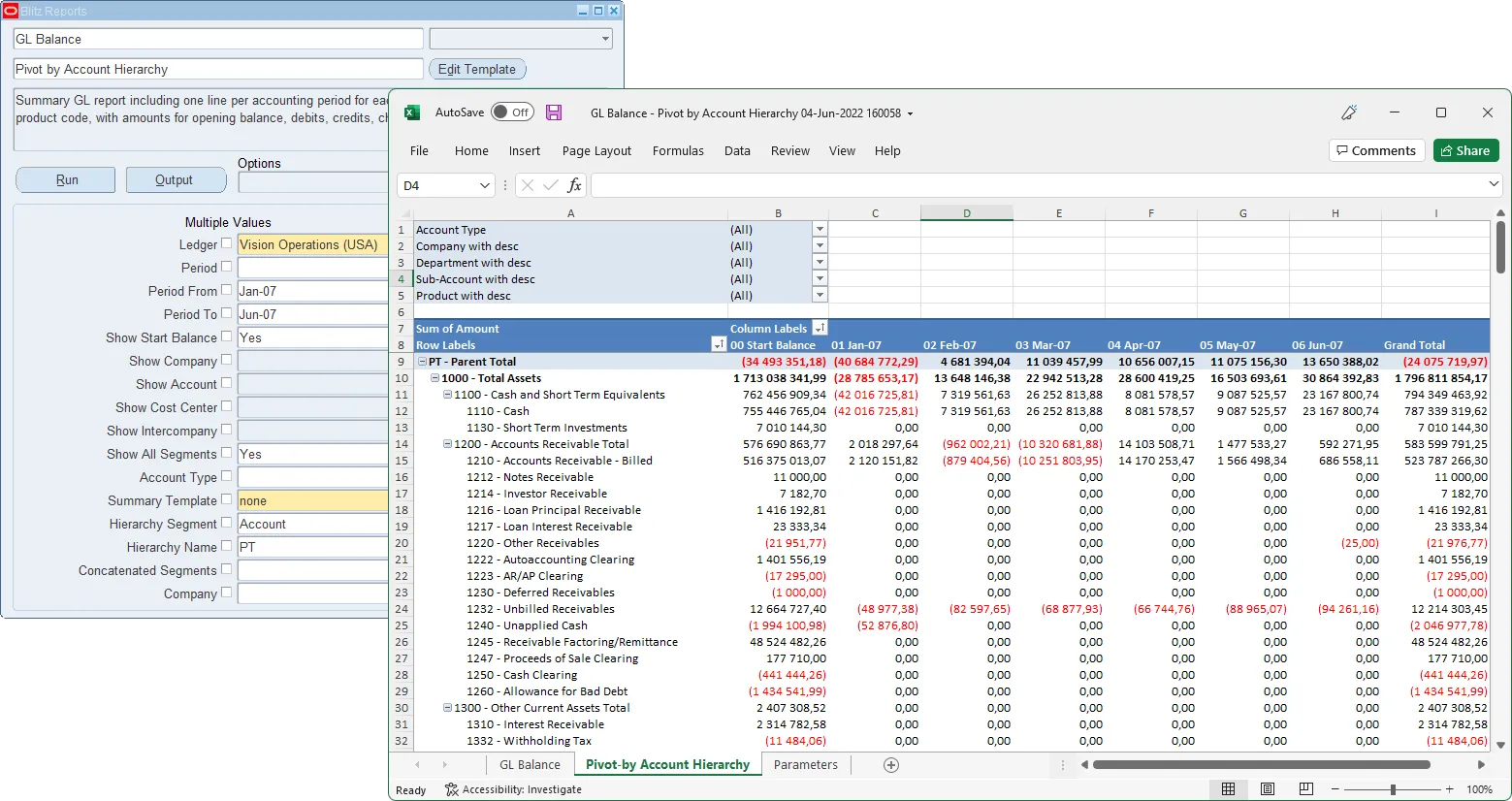
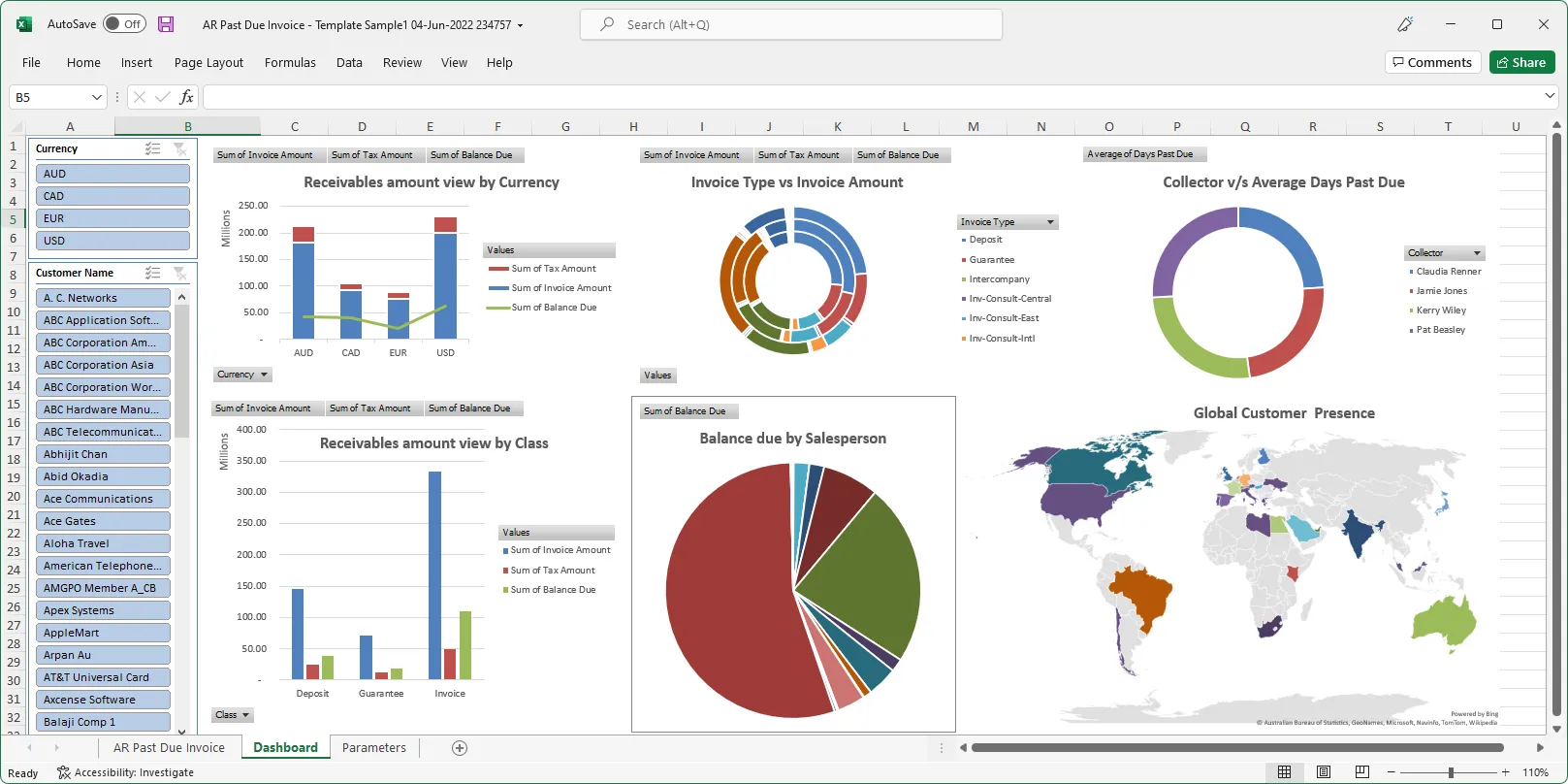
The Excel template upload functionality in Blitz Report allows users to create their own layouts by uploading an Excel template with additional sheets and charts, automatically refreshed when the report runs again. This allows to create custom dashboards and more advanced visualizations of report data.
You can download and use Blitz Report free of charge for your first 30 reports.
The installation and implementation process usually takes less than 1 hour; you can refer to our installation and user guides for specific details.
If you would like to optimize your Oracle EBS implementation and or operational reporting you can visit www.enginatics.com to review great ideas and example usage in blog. Or why not try for yourself in our demo environment.
Useful Links
Blitz Report™ – World’s fastest data upload and reporting for Oracle EBS
Oracle Discoverer replacement – importing worksheets into Blitz Report™
Blitz Report™ Questions & Answers
Supply Chain Hub by Blitz Report™
© 2025 Enginatics